
Wynn Resorts' Mobile App

Digital Key Suite

Rebuilding trust in a high-stakes mobile access experience
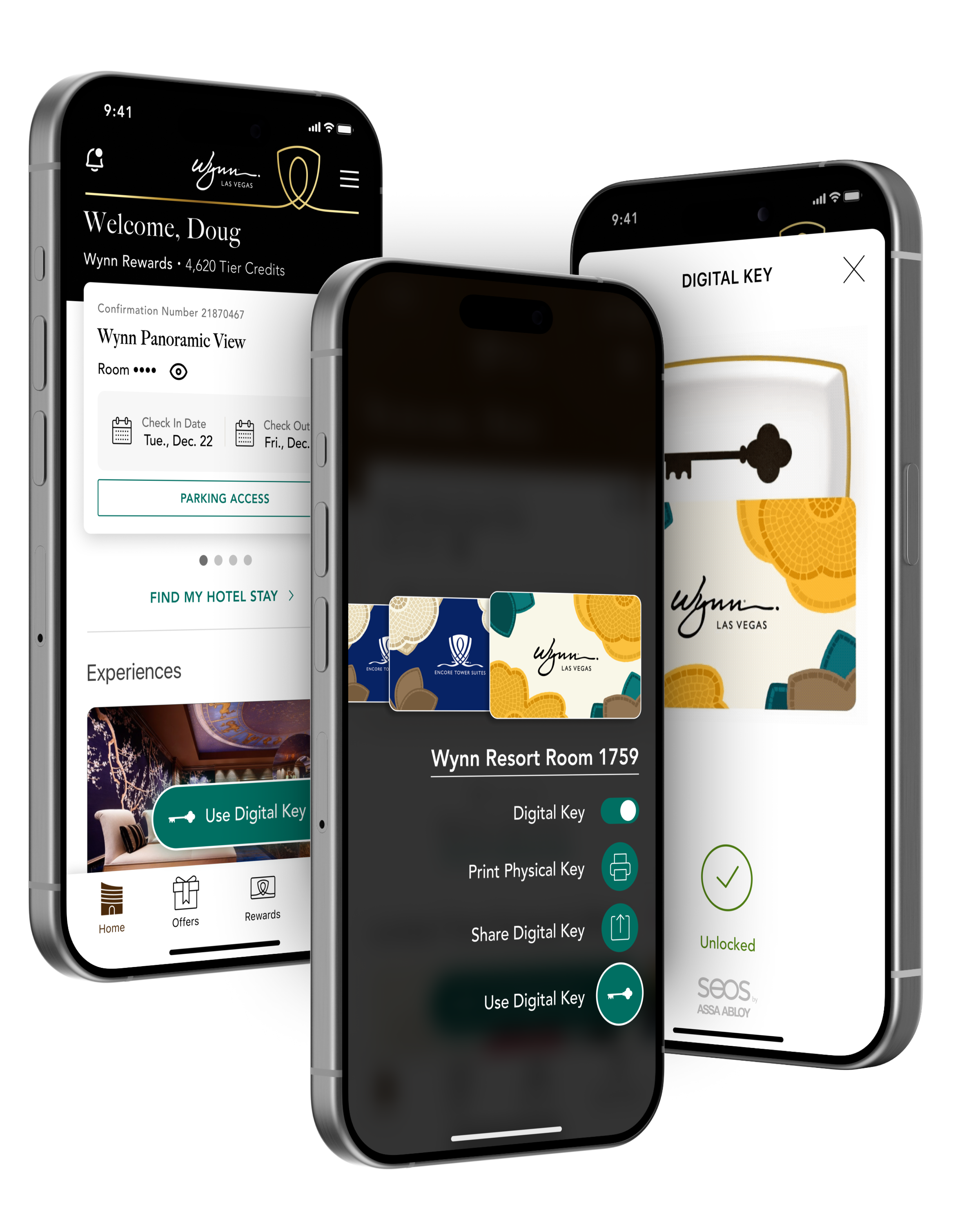
iPhone mockup

The Problem

A Promising Feature That Failed

Wynn Resorts introduced a Digital Key experience to allow guests to:
  • Check in via mobile
  • Unlock hotel rooms, elevators, and amenities
  • Manage their stay without visiting the front desk
The goal was to provide convenience, flexibility, and a contactless experience, especially during COVID. However, shortly after launch, the feature was pulled.

Low Trust in a High-Stakes Moment

Unlocking a hotel room is not a casual interaction and usage suffered due to:
  • Slow connectivity created hesitation
  • Guests feared being locked out
  • Many defaulted to physical keys as backup

Poor Discoverability

  • The Digital Key was buried behind a CTA on the home screen
  • Only accessible through a multi-step flow
  • Easy to miss, even for engaged users

Research Insights

Research & Discovery

To better understand the issues with the initial release, we conducted internal testing and observational sessions across the mobile app experience.

Working closely with product, engineering, and hotel operations, we evaluated how the Digital Key performed in real-world conditions and identified where guests were experiencing confusion or friction.

These insights helped uncover both usability gaps and system limitations that were impacting adoption and trust.

Technical Constraints Exposed UX Weaknesses

The experience was further impacted by environmental and technical limitations:
  • WiFi latency slowed key response times
  • Devices frequently switched between networks, causing inconsistency
While these issues were outside direct design control, they significantly shaped user perception.
This revealed a critical gap:
  • The interface did not provide enough feedback or reassurance during delays
  • Users interpreted latency as failure rather than normal system behavior
Insight: Technical delays alone don’t break an experience, but when combined with unclear UX, they amplify the feeling that the system is unreliable.

Complex, Unfamiliar Interaction Model

The Digital Key experience did not align with users’ existing mental models for how a “key” should behave.
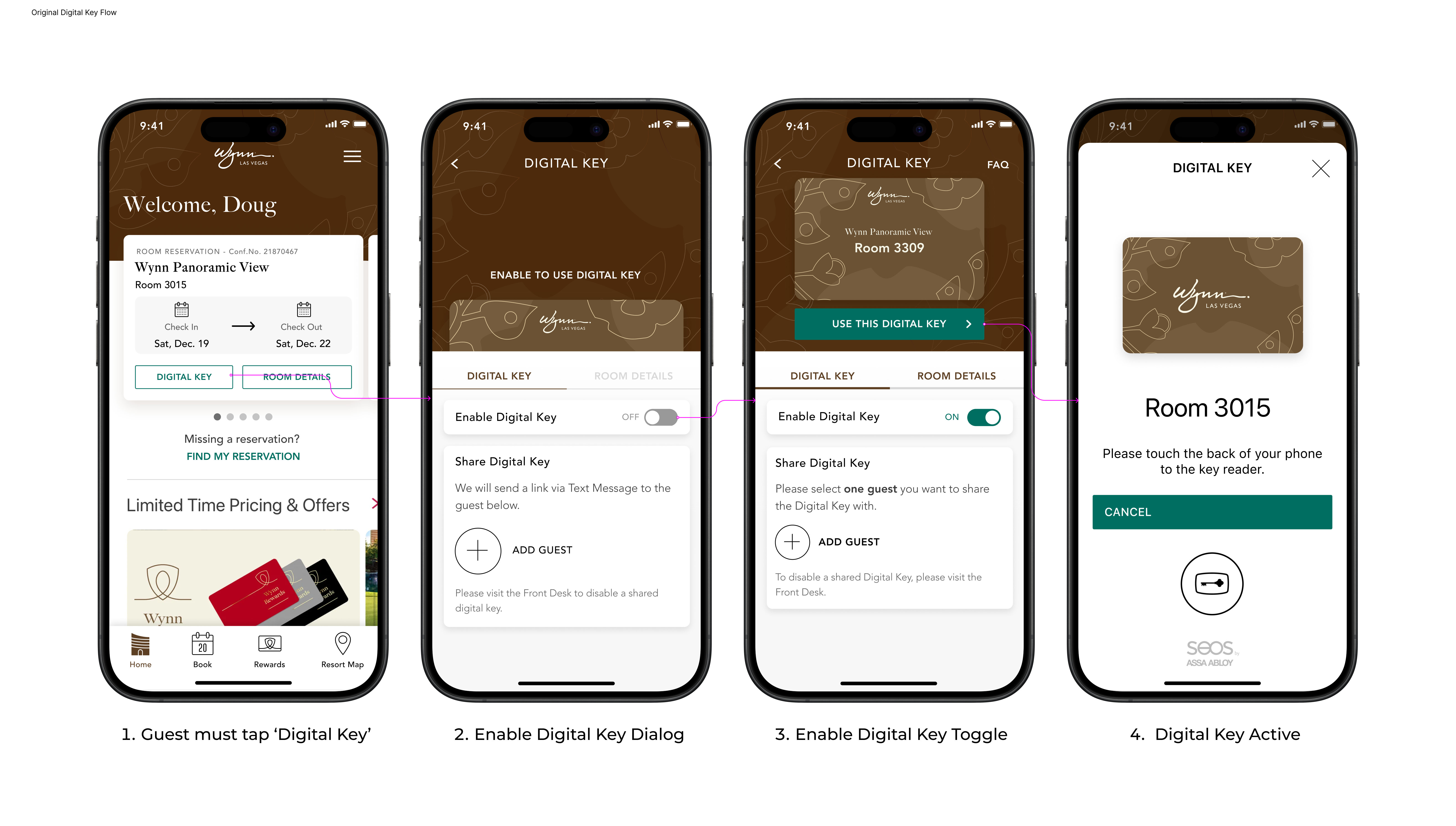
Before:
  • Tap into Digital Key
  • Toggle it on manually
  • Tap a card (unclear affordance)
  • Then access the key
This multi-step process introduced unnecessary friction and ambiguity. Users were unsure:
  • When the key was actually active
  • What action would unlock their door
  • Whether the key was working as expected
Insight: For a high-stakes interaction like room access, users expect immediacy and clarity. Any ambiguity increases hesitation and reduces trust.

Insights

Through internal testing, stakeholder feedback, and observation:
The original Digital Key release didn’t fail just because of performance. It failed because it felt unreliable, hard to access, and unfamiliar, making users hesitant to trust it.

My goal shifted from the original ask of :
  • “Improve performance”
to solving for the core issues:
  • “Design an experience that feels fast, obvious, and trustworthy—even under imperfect conditions.”
The original Digital Key release didn’t fail just because of performance. It failed because it felt unreliable, hard to access, and unfamiliar, making users hesitant to trust it.

The Solution

Design Solutions

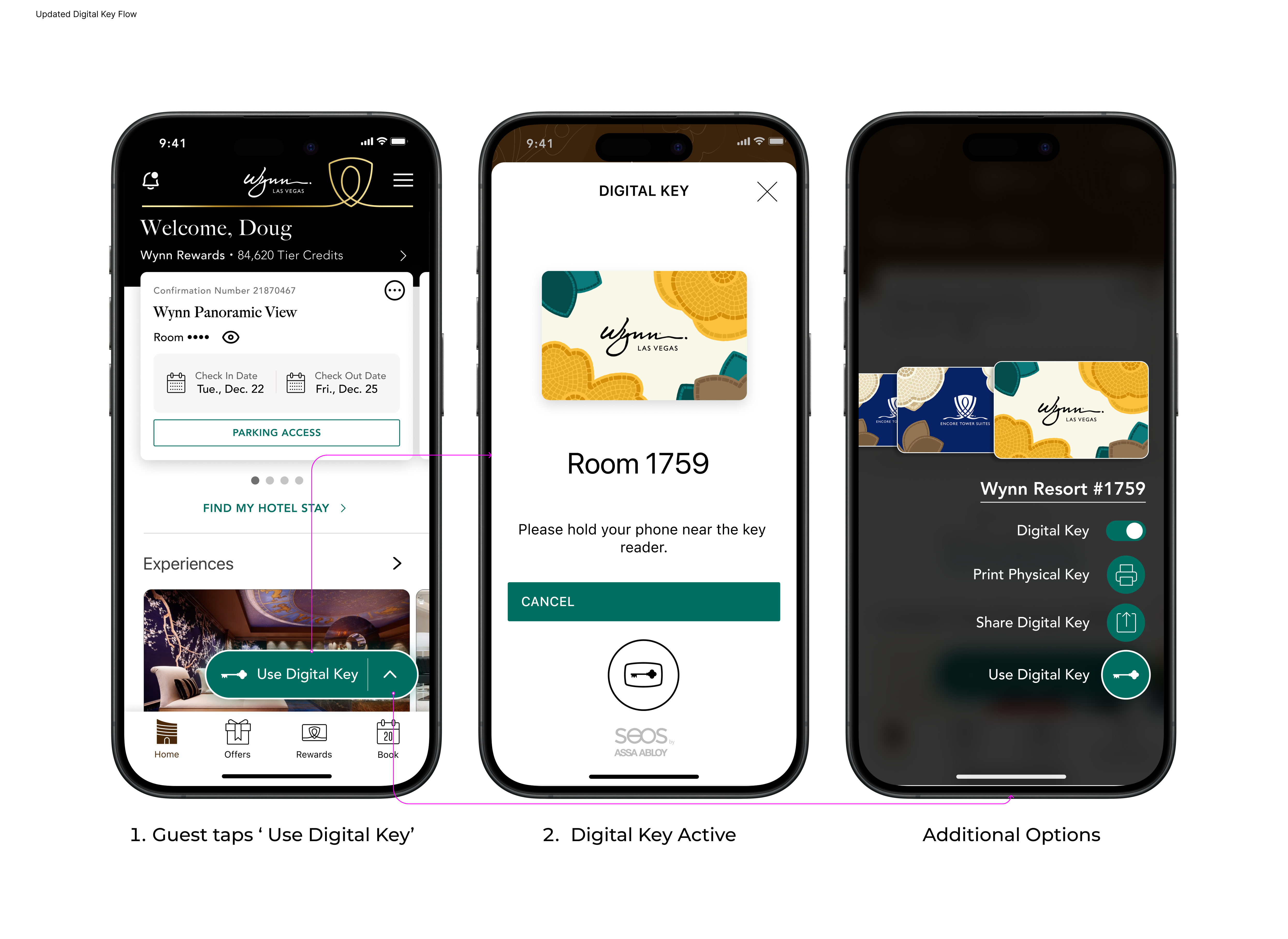
Make the Digital Key a First-Priority Action

The redesign focused on three principles:

Visibility → Always accessible
Simplicity → Reduce steps to near-zero
Trust → Provide clear feedback and reliability cues
Design Solution 1:

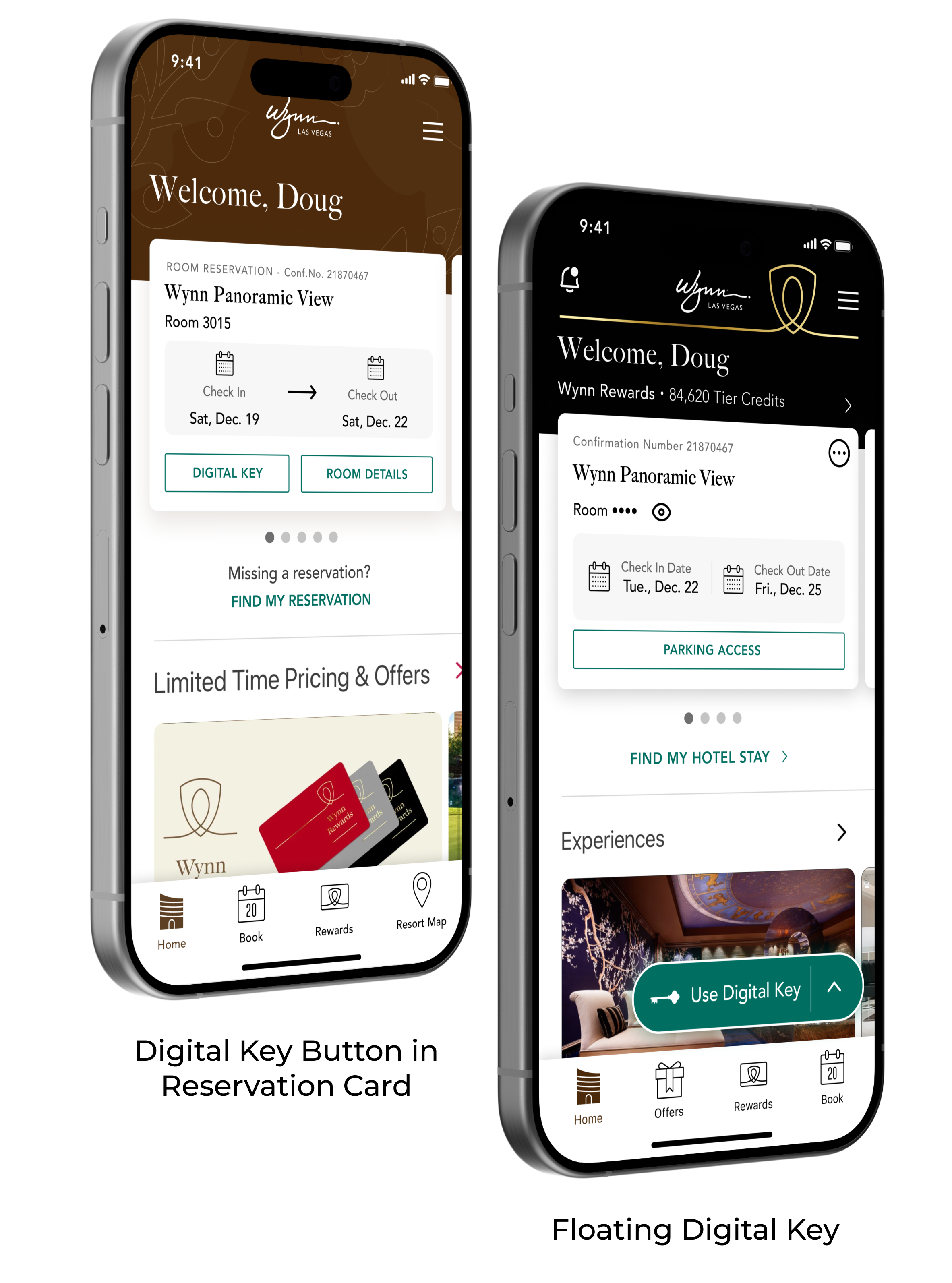
Persistent Floating Key

Introduced a floating key action button on the home screen.

Impact:

Always visible when a guest has a reservation
Reinforces mental model: this is your key
Reduces effort to access
Designed and launched internal admin tool
Embedded booking engine inside “My Stays”

This pattern leverages familiar interaction models seen in other mobile apps, increasing usability through recognition.

Usability Solutions

Strengthen Usability and System Clarity

The redesign introduced targeted usability solutions:

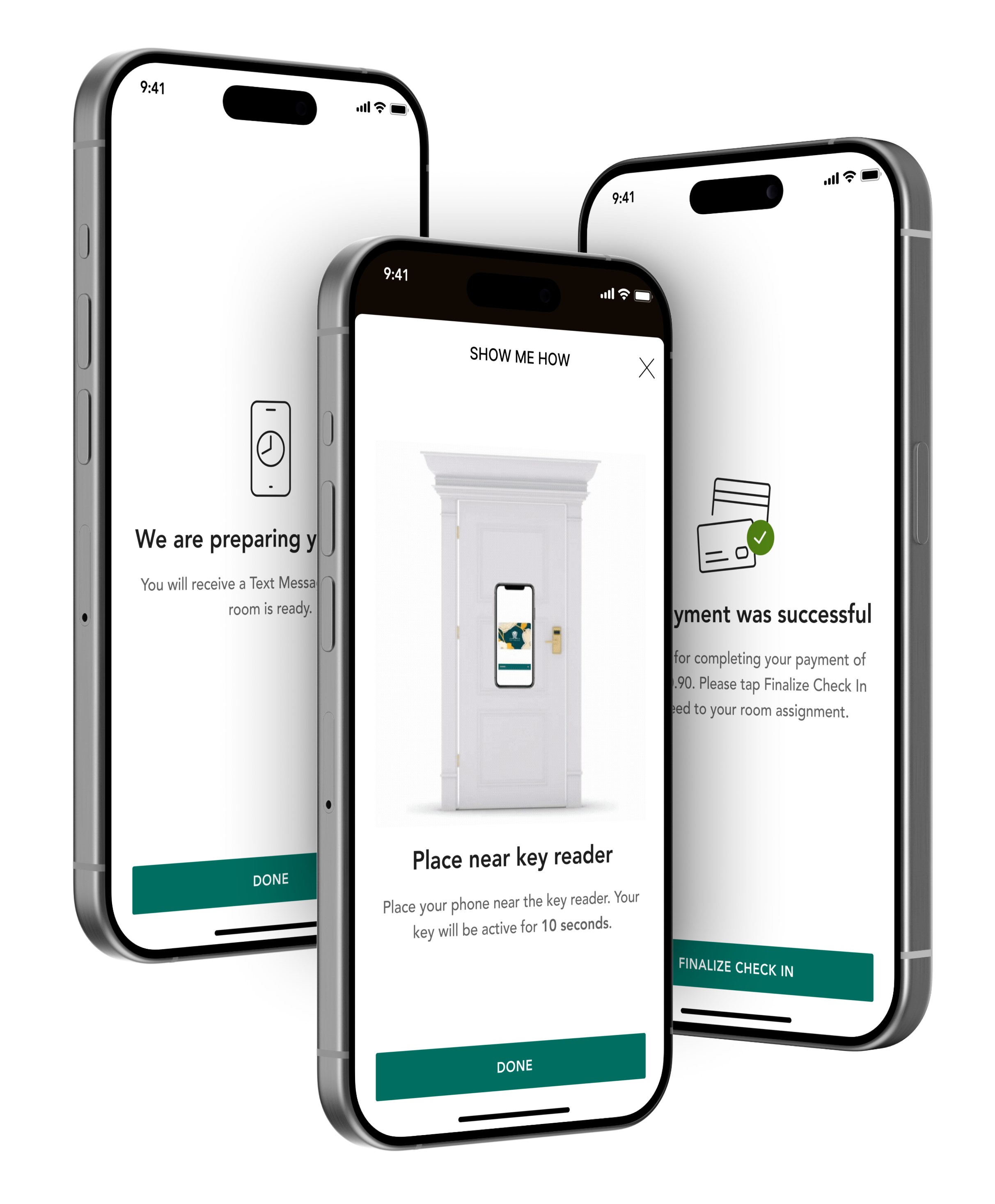
Feedback → Loading states and contextual error messaging
Clarity → Reduce ambiguity in key interactions
Continuity → Unify the Digital Key experience across the stay
Usability Solution 1:

Designing for Trust Under Imperfect Conditions

Given technical constraints (latency, connectivity), the focus shifted to perceived reliability.

Key improvements:

Clear loading states (e.g., unlocking feedback)
Contextual error messaging
Faster-feeling interactions through feedback design
Reduced ambiguity in system status
Usability Solution 2:

Improved Experience Architecture

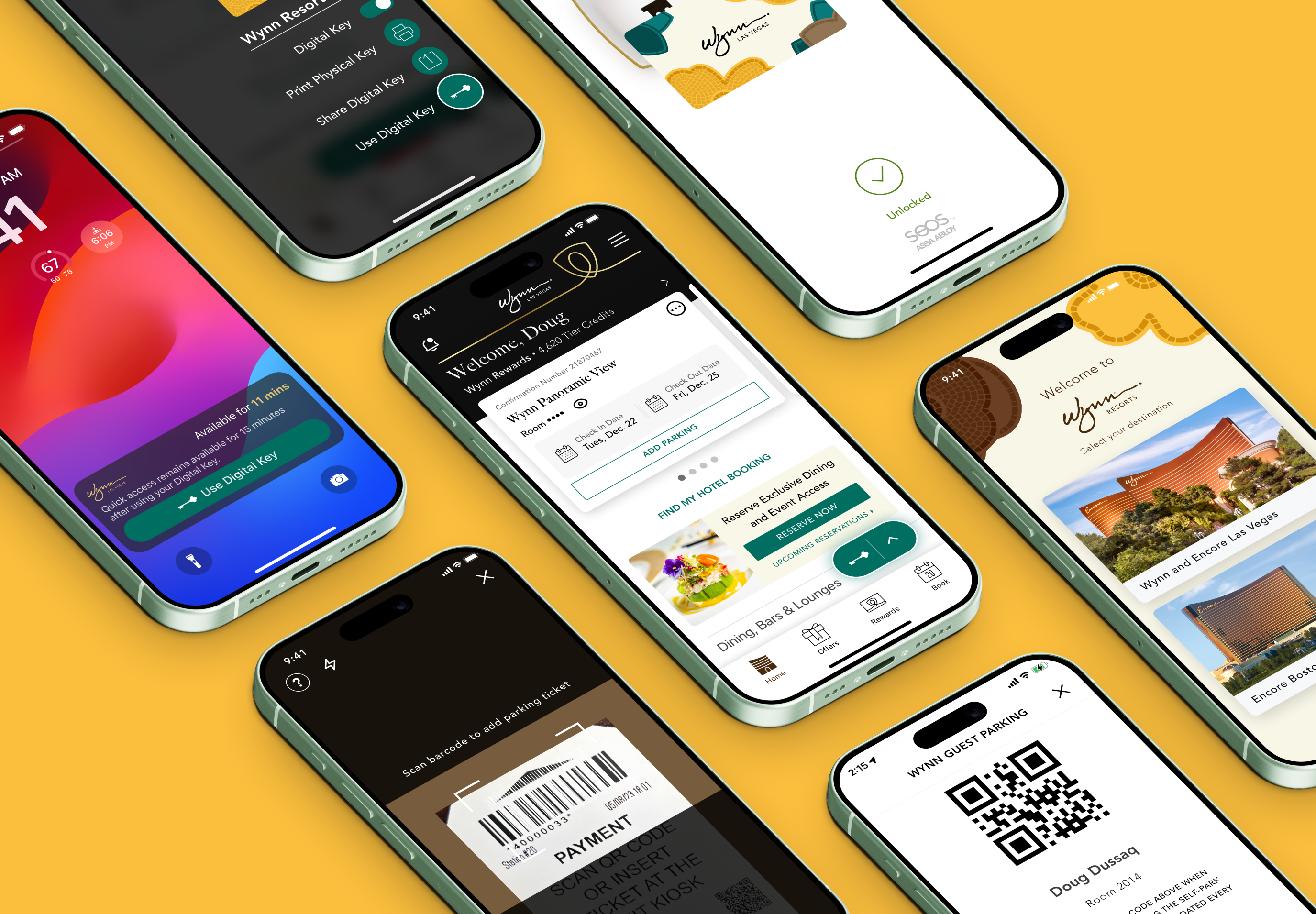
The Digital Key evolved into a Digital Key Suite, guiding guests through their stay.

Key improvements:

Mobile check-in
Digital Key design and usability updates
Elevator and amenity access
Parking integration
Mobile checkout

A clearer visual hierarchy guided users through their stay journey.

Customer Journey Map

To better understand how the Digital Key experience fit into the broader guest journey, I mapped the end-to-end experience from pre-stay through post check-out. This helped identify key moments where guests interacted with the mobile app, as well as gaps in usability, visibility, and system feedback.

Through this exercise, it became clear that the Digital Key was too buried within the experience and required too many steps to access—especially during critical moments like room entry. This reframed the opportunity: simplify the journey and make the key immediately accessible when guests need it most.

The updated journey map reflects a shift toward a more streamlined experience, where the Digital Key is easier to find, faster to access, and better integrated across the entire stay.

Digital Key Suite Customer Journey Map

Outcome

Relaunch Success

Shift in Mobile App Perception

After an unsuccessful first launch, we introduced a simple one-pager to align front desk and call center teams on how to support and communicate the Digital Key Suite. This became a turning point—driving stronger internal buy-in, smoother customer experiences, and a clear shift in how the mobile app was perceived
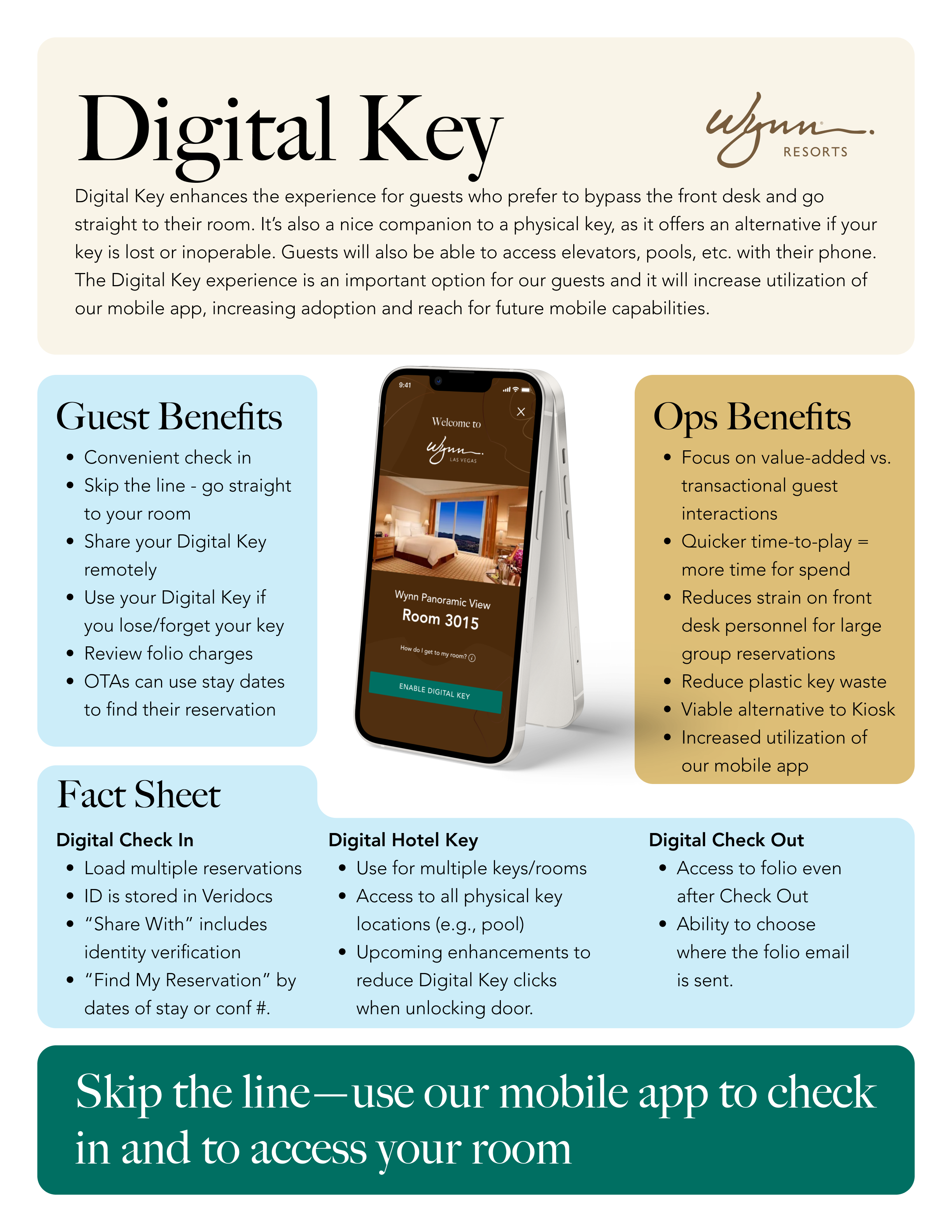
Digital Key Optimization One-Pager

Guests began using the Digital Key as intended

Successful usage of the Digital Key Suite of features increased drastically.

Staff were trained and able to support it confidently

Enabled staff to confidently support the Digital Key through improved usability, supported by training and a one-pager guide.

The feature became a reliable option, even if not the default for all guests

Enabled the Digital Key to become a dependable alternative to physical keys for guests who preferred a digital experience.

Increased features to bring value to hotel guests

Expanded the Digital Key into a comprehensive suite of tools, adding value across the guest stay from check-in through checkout.

Restored stakeholder confidence

Rebuilt stakeholder confidence by addressing key usability and reliability issues, enabling a successful relaunch that has remained in place since.

Conclusion

Key Takeaways

There were several key learnings from the Digital Key project, particularly in navigating both technical and design constraints within an already in-progress product. Addressing this required balancing usability improvements with system limitations while rebuilding trust in a feature that had initially underperformed.

The successful relaunch was driven by both thoughtful design and close collaboration with product and engineering teams. Together, we aligned on constraints, iterated on solutions, and delivered a more reliable, intuitive experience focused on simplicity, visibility, and trust.

1. Trust is the Product

For high-stakes interactions, usability isn’t enough—users must feel confident the system will work.

2. Simplicity Reduces Risk

Reducing steps didn’t just improve usability, it reduced perceived failure.

3. Visibility Drives Adoption

Reducing steps didn’t just improve usability, it reduced perceived failure.

4. Design for Real Conditions, Not Ideal Ones

Instead of waiting for perfect infrastructure, we designed for latency, network inconsistency and edge cases.

Next Steps

Future opportunities include:

Continued performance optimization
Deeper integration with platform features
Personalization based on guest behavior
Expanding Digital Key capabilities to native mobile phone wallets