


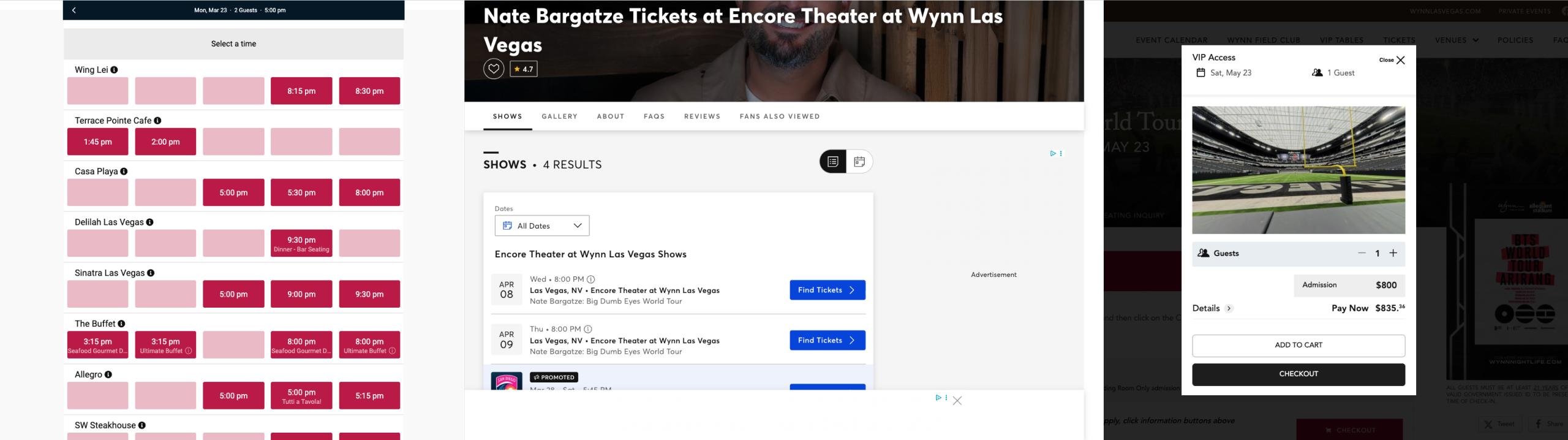


“It is quite ironic that in a resort that boasts 20 restaurants, it was impossible to get a table for dinner for two at 5:30 pm. Impossible. We tried all of them.”
- Wynn Las Vegas Guest, February 2024




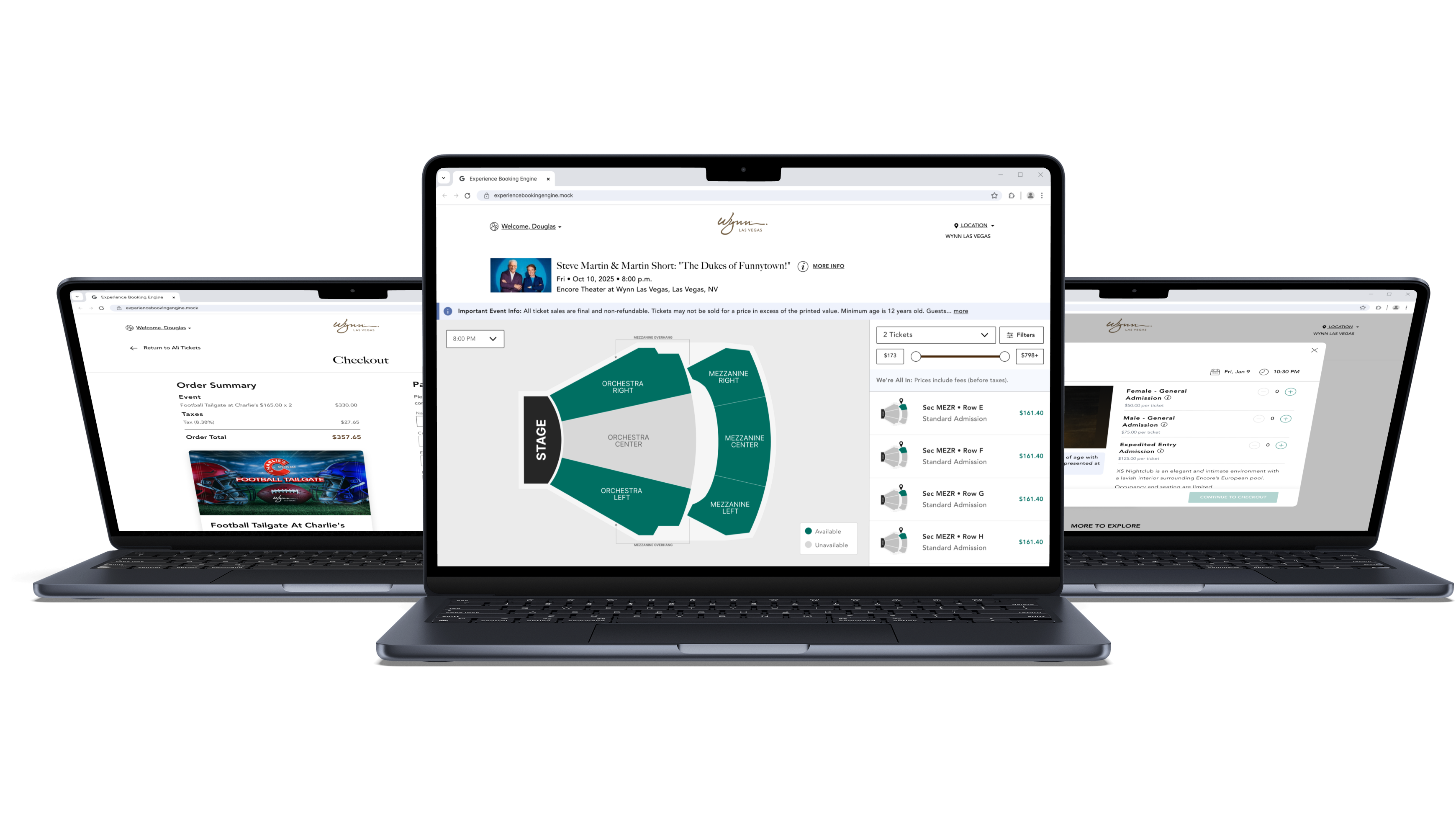
To address the fragmented and confusing booking experience, a key goal was to consolidate multiple booking platforms into a single, Wynn-branded flow.
In early conversations with VPs and revenue leaders, I advocated for introducing a dedicated inventory model for hotel guests.
The hypothothesis was that this would help offset some on the inventory issues guest were facing, all while improving control of inventory and reservations.
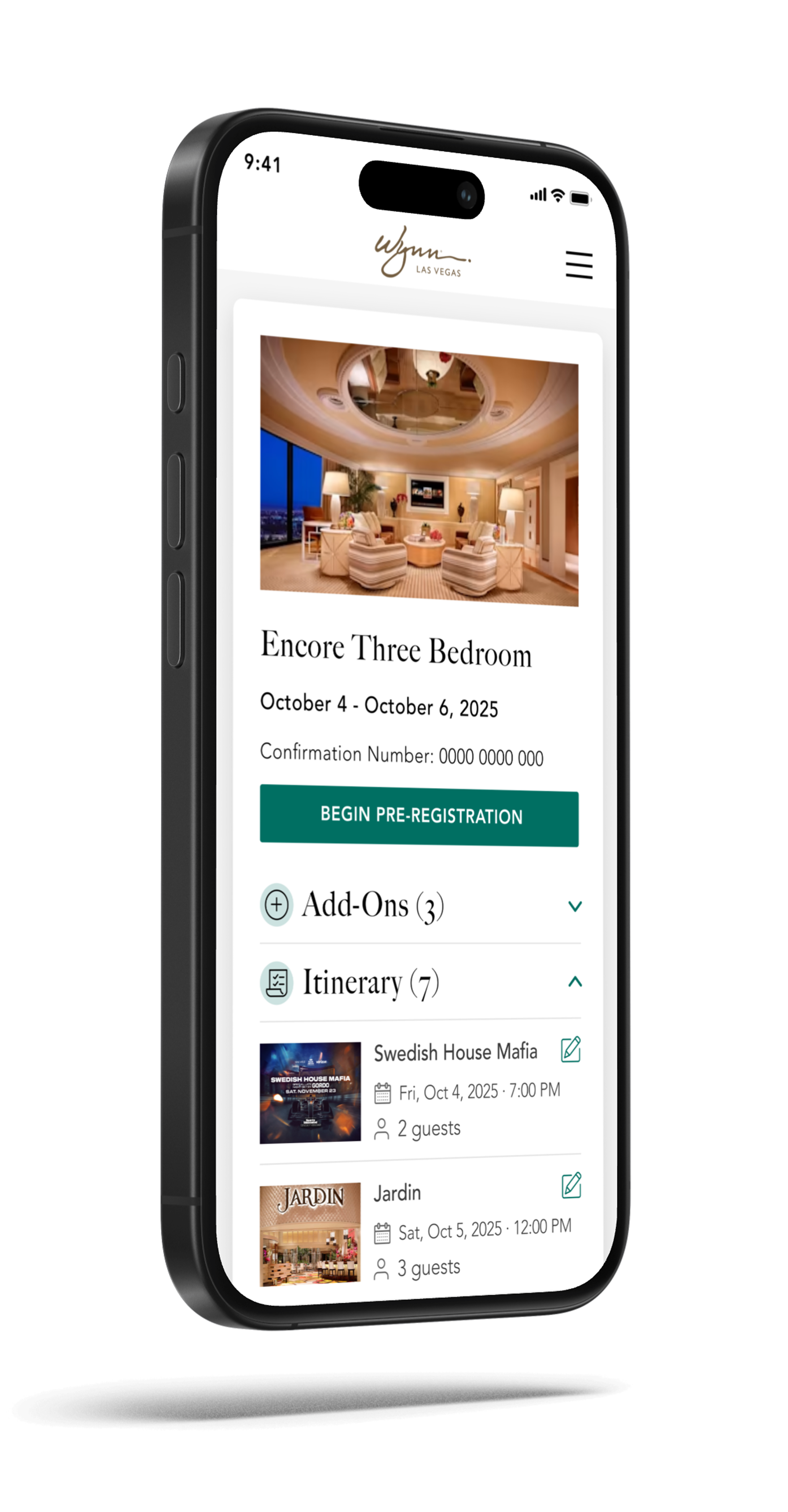
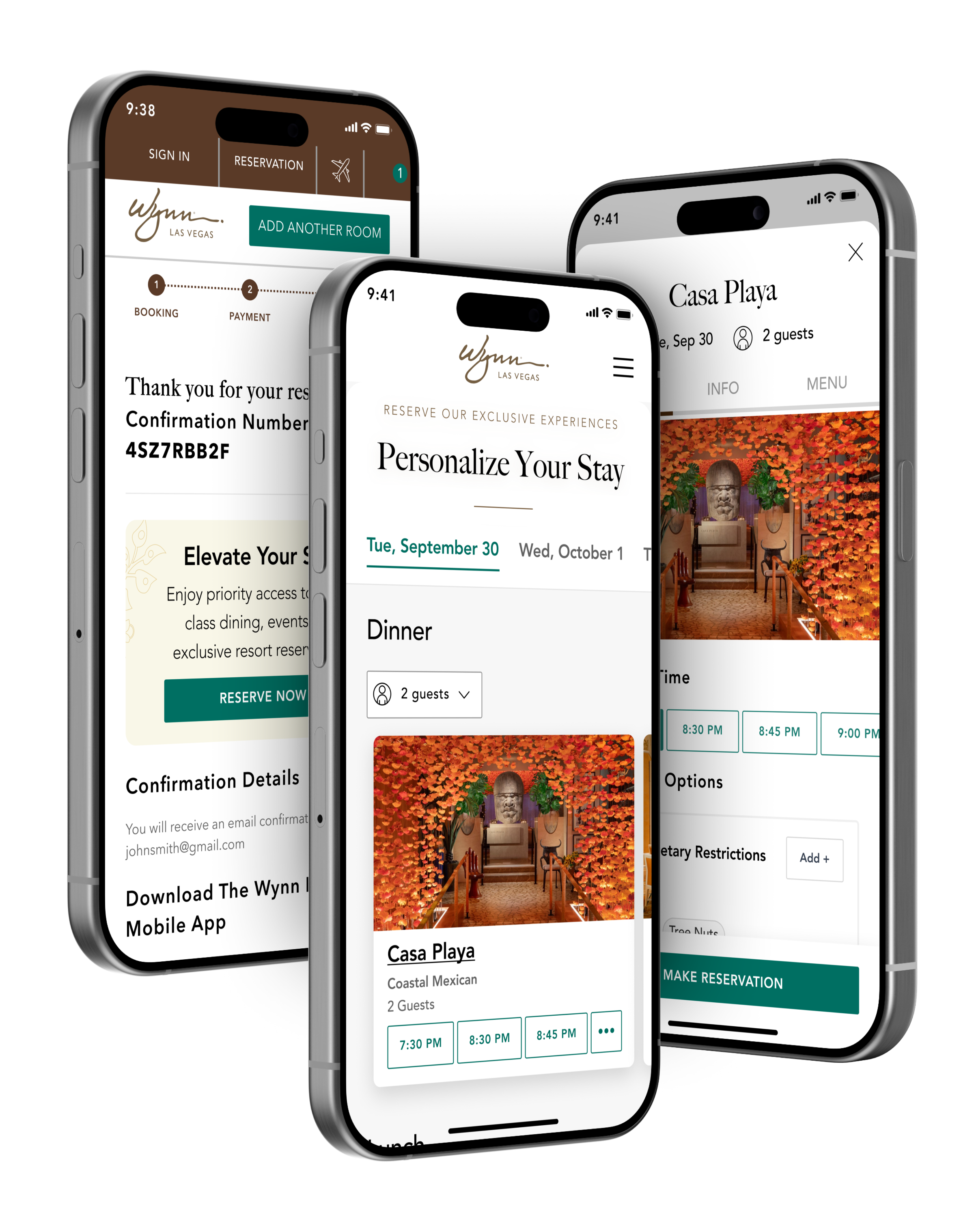
Embedding the Experience Booking Engine inside the authenticated “My Stays” section post-booking.
Guests book their hotel weeks in advance, but plan dining and experiences later, creating an opportunity for a post-booking experience platform.
To ensure the platform supported the full guest experience, I mapped the updated journey from hotel booking through stay planning and on-property experiences. The goal was to design a unified system where guests could seamlessly discover, plan, and reserve dining, events, and add-ons directly within their stay itinerary.

This phase validated the allocation strategy and established the infrastructure foundation.
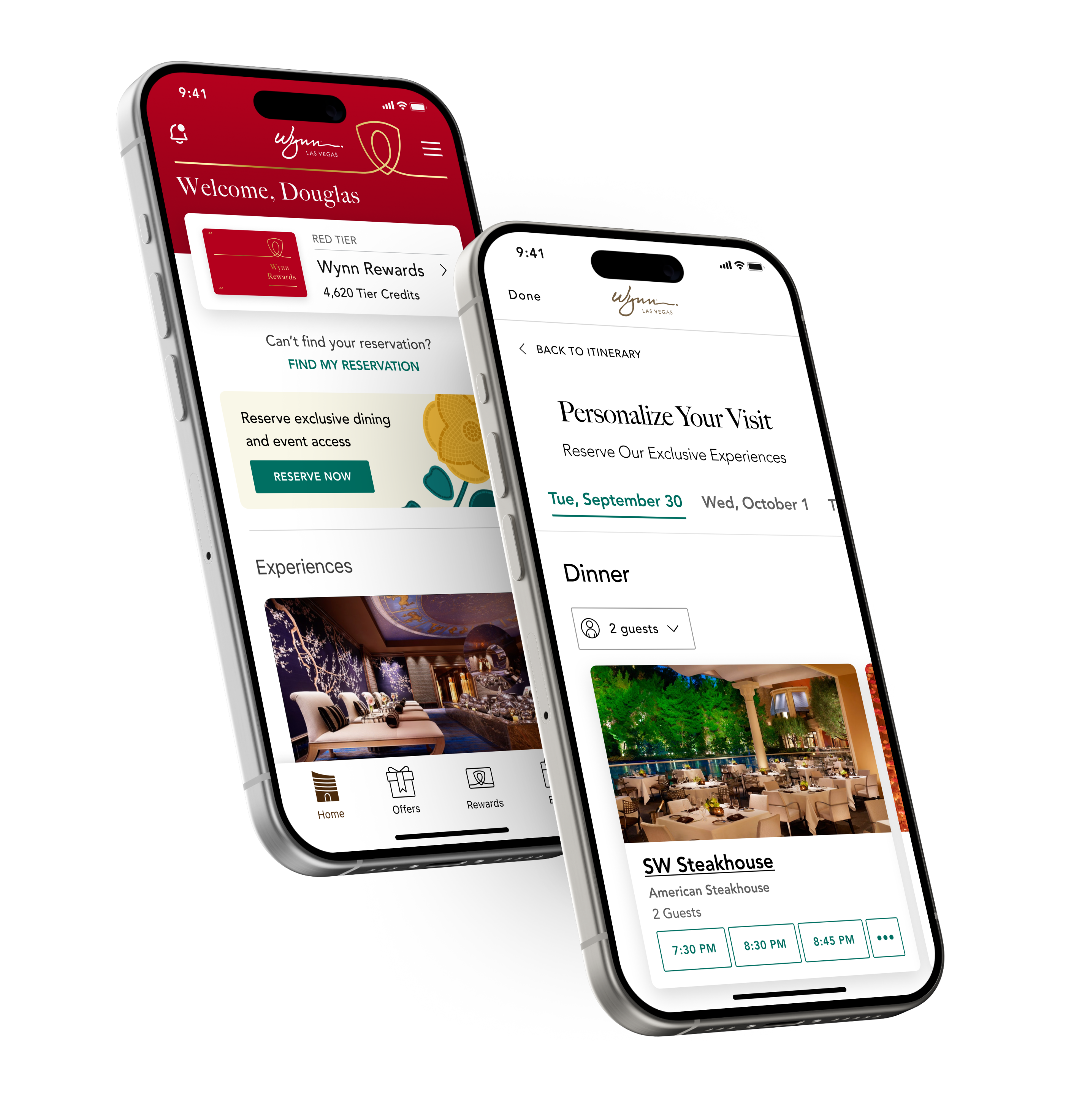
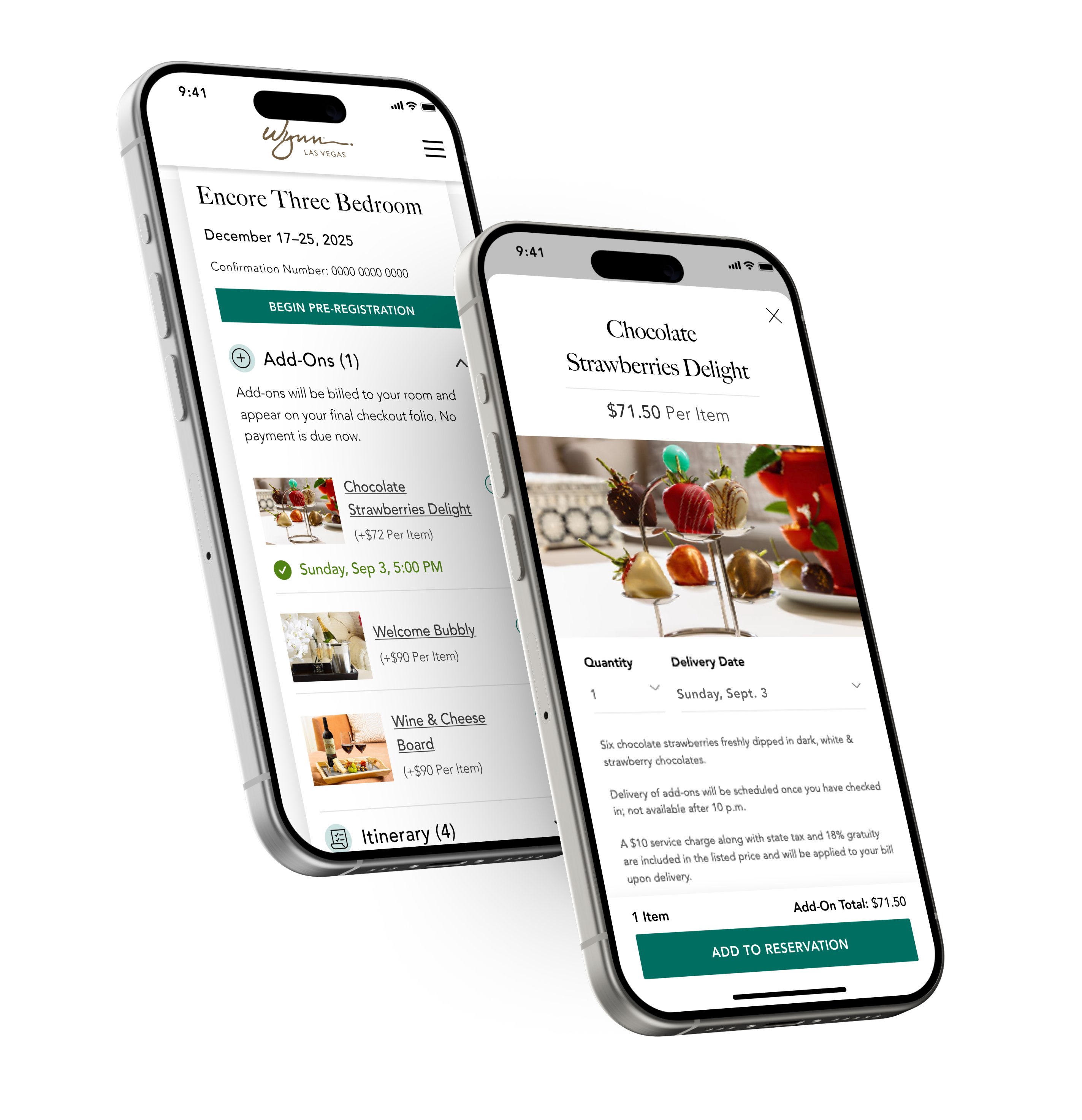
We expanded the Experience Booking Engine into the Wynn mobile app.
Unlike authenticated hotel guests in “My Stays,” mobile users do not receive access to dedicated inventory allocations.
The most current phase introduced Add-Ons directly within “My Stays.”
Benefits for Guests and Business
This interactive prototype showcases the user experience and design flow of the project. Explore the screens to see how key features and interactions come together.
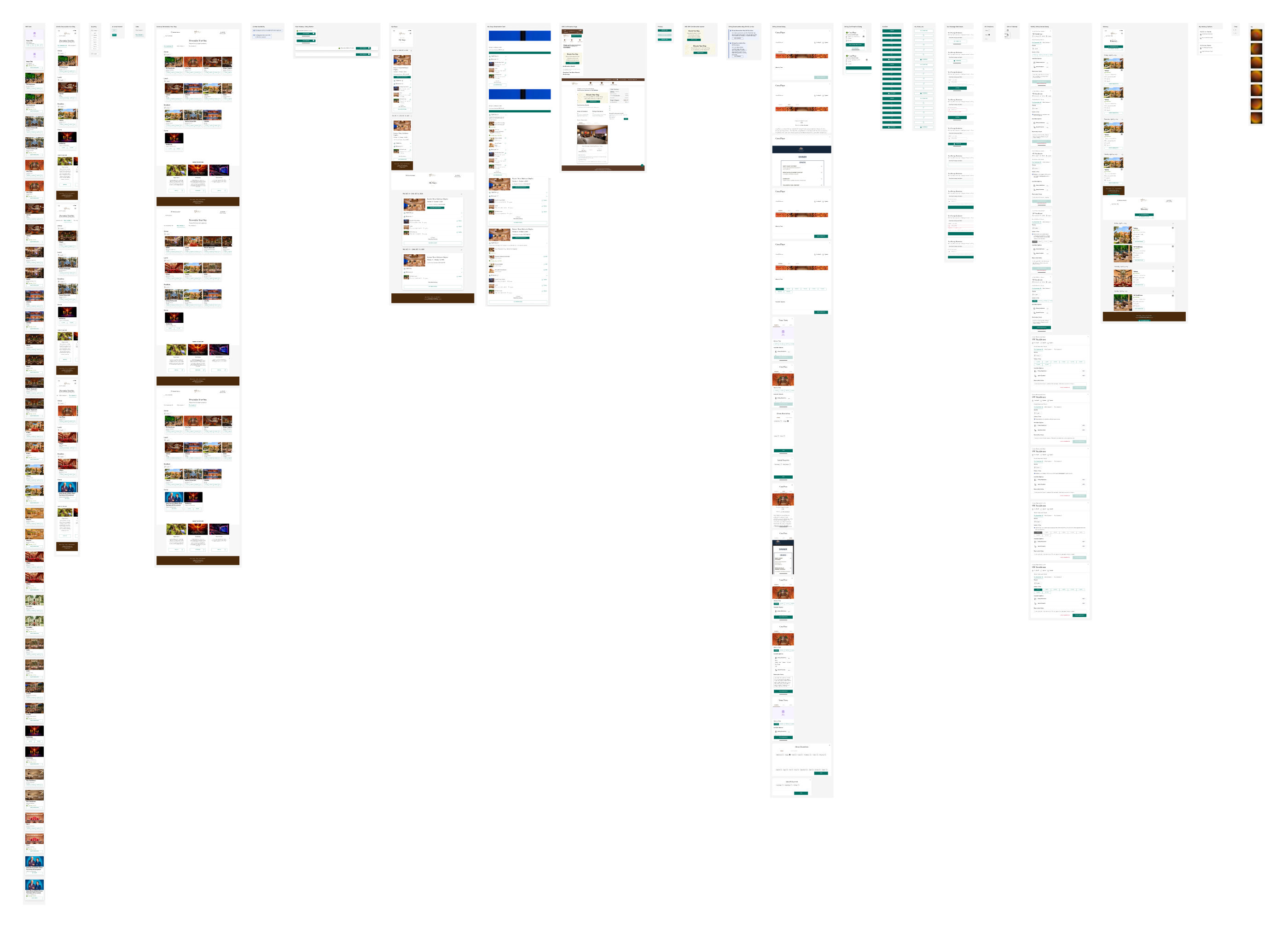
Because the platform was built from the ground up, our pre-existing design system didn't have the components needed. This led to the neccessity of a new design system with newly defined components. I developed a scalable design system including:
Components were structured to accommodate varying API responses whilemaintaining a consistent interaction model.
Several patterns later influenced other areas of the website and mobile application.
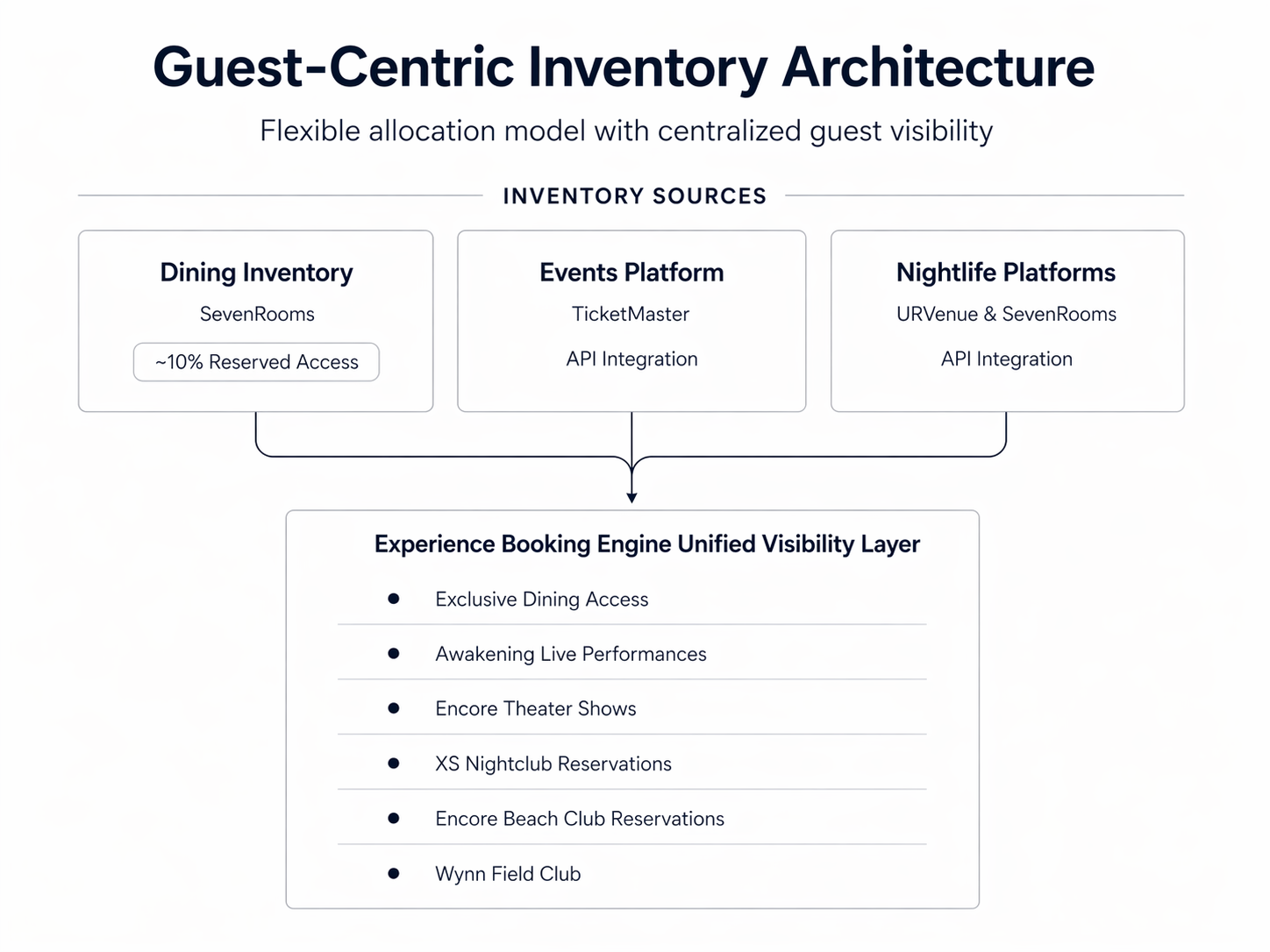
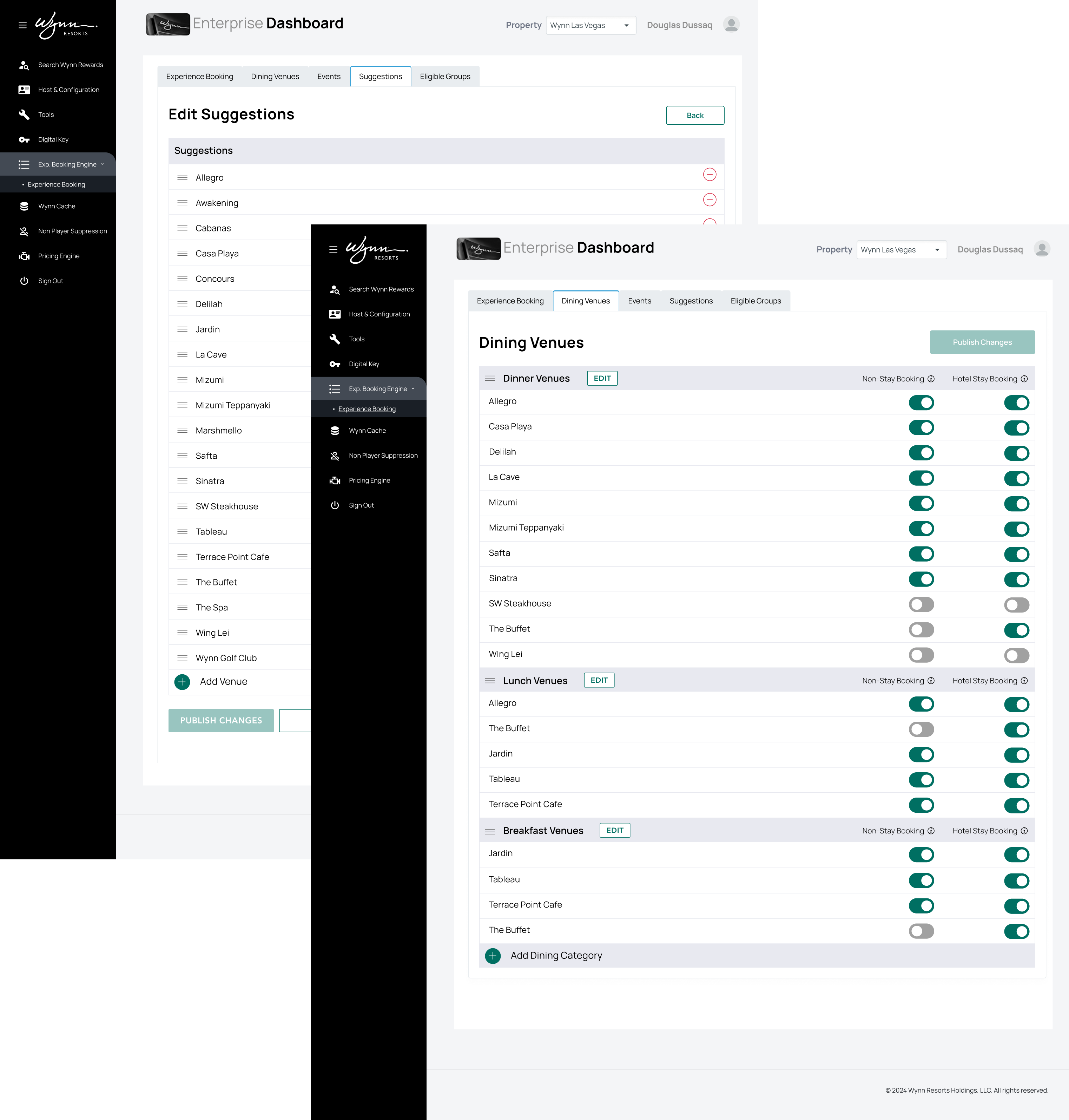
Since XBE aggregated experiences across multiple reservation systems, managing inventory and operational control was a critical design consideration. Working with revenue and Food & Beverage teams, we introduced a flexible inventory framework and internal management tools that allowed teams to prioritize hotel guests while maintaining public availability.
This infrastructure balanced guest access, revenue strategy, and operational flexibility while keeping the complexity invisible to the guest experience.
One of the largest challenges in this project was coordinating integrations across multiple external reservation platforms. While I initially proposed ideal flows, visual patterns, and usability improvements, many design decisions had to be balanced against technical constraints from each vendor’s API and booking logic.
Rather than treating these limitations as blockers, the team worked collaboratively to design a unified experience layer that could accommodate the differences between systems while maintaining a consistent user experience.
Successfully bringing these platforms together required close coordination between business stakeholders, engineering teams, external partners, and design. Through iterative collaboration, we were able to consolidate these fragmented systems into a single booking experience while preserving the flexibility required by each platform.

Designing the Experience Booking Engine was the largest and most complex platform initiative I’ve led, requiring alignment across product vision, operational realities, and technical constraints.
One key takeaway was the importance of investing early in discovery. We began the project with a broad “blue sky” vision for how guests could plan their stay, but as development progressed we uncovered additional dependencies, such as new API integrations and inventory management frameworks, that could have been identified earlier. This reinforced the value of deeper upfront system mapping to future-proof complex platforms.
The project also highlighted the effectiveness of rapid prototyping when working with cross-functional stakeholders. Creating interactive prototypes allowed us to quickly validate concepts, test technical feasibility, and align teams across product, engineering, and operations before committing to development.
Finally, leading this initiative reinforced the importance of true product ownership as a designer. Beyond the interface, the work involved shaping inventory strategy, operational tools, and the overall experience architecture, demonstrating how design can influence systems, not just screens. This project reinforced that great guest experiences often depend on solving complex operational systems behind the scenes.
The Experience Booking Engine is continuing to evolve into the centralized platform for all non-room reservations across Wynn Resorts.
Today, some website entry points still redirect guests to external booking platforms such as SevenRooms, Ticketmaster, and URVenue. The next phase will bring these experiences fully into the Experience Booking Engine, allowing guests to complete reservations within a single unified interface regardless of where they enter the journey.
Planned expansions include:
Over time, the platform will serve as Wynn’s custom reservation engine for experiences, complementing the existing room booking infrastructure powered by SHR. The long-term vision is a unified platform that allows guests to plan and personalize their entire resort experience in one place.
If you like what you see and want to work together, get in touch!
dougdussaq@gmail.com