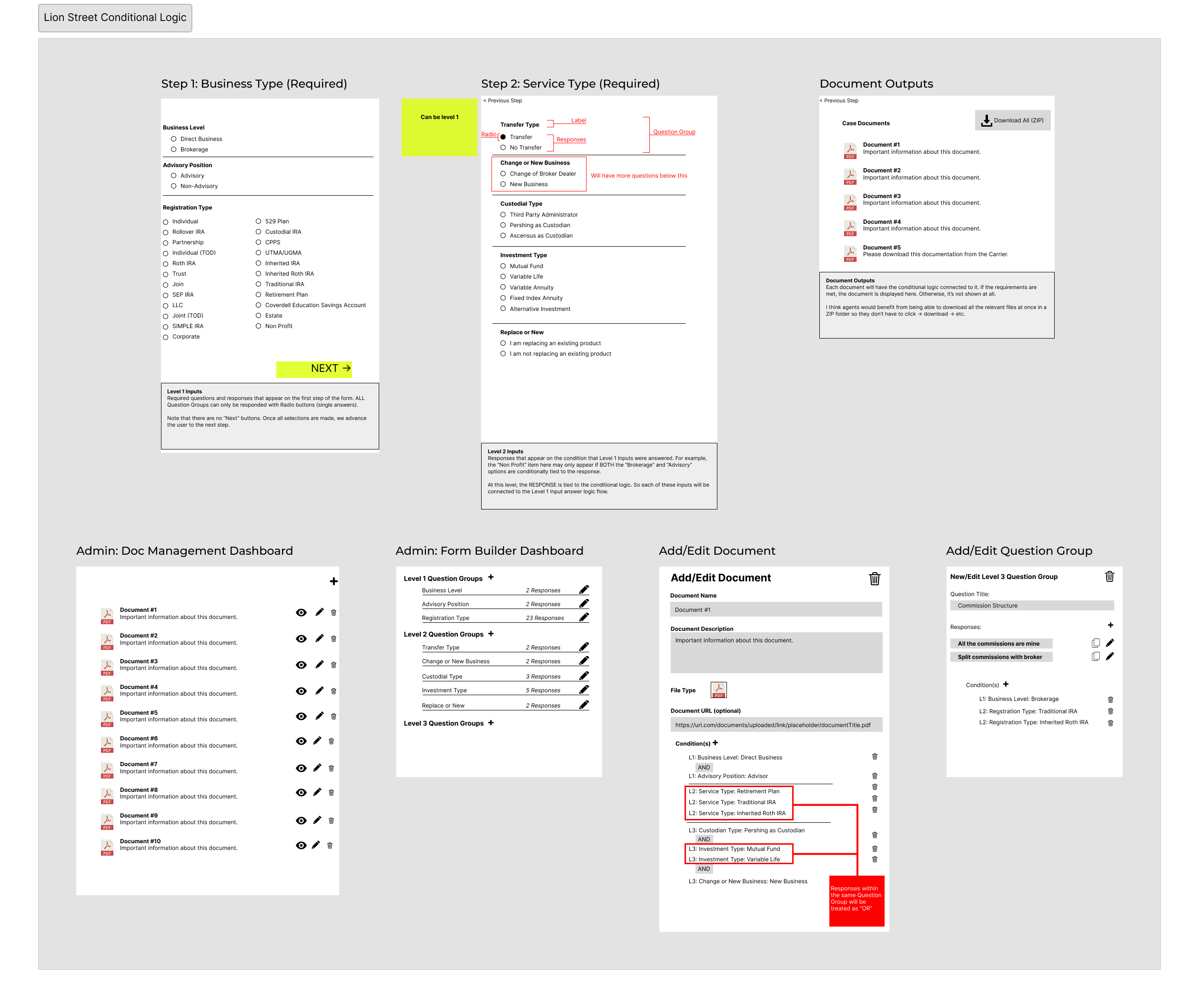
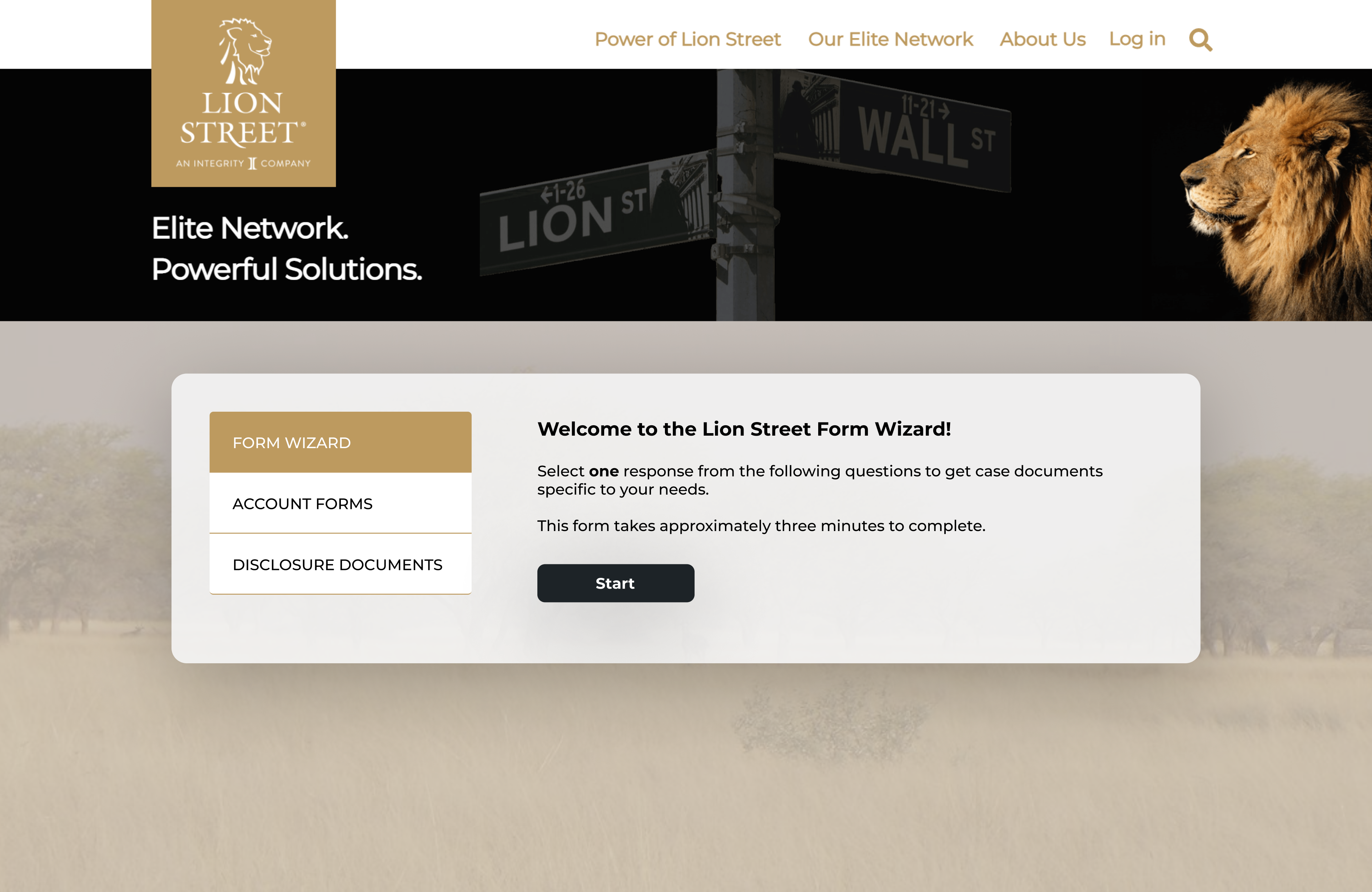
Agents at Lion Street were required to navigate complicated forms and manually determine which insurance documents were needed for their clients.
This process was:
Time-consuming and inefficient
Mentally taxing due to excessive information
Inconsistent across a network of 1,000+ agents
High Cognitive Load and Guesswork
Agents were expected to:
Interpret complex requirements
Navigate long lists of documents
Make decisions without guidance
Which led to:
Increased errors
Slower completion times
Reliance on guesswork or external support
The Objectives
Eliminate Guesswork
Introduce structured, conditional decision-making that guides agents through relevant questions, removing ambiguity and reducing the need for external support.
Reduce Time and Effort
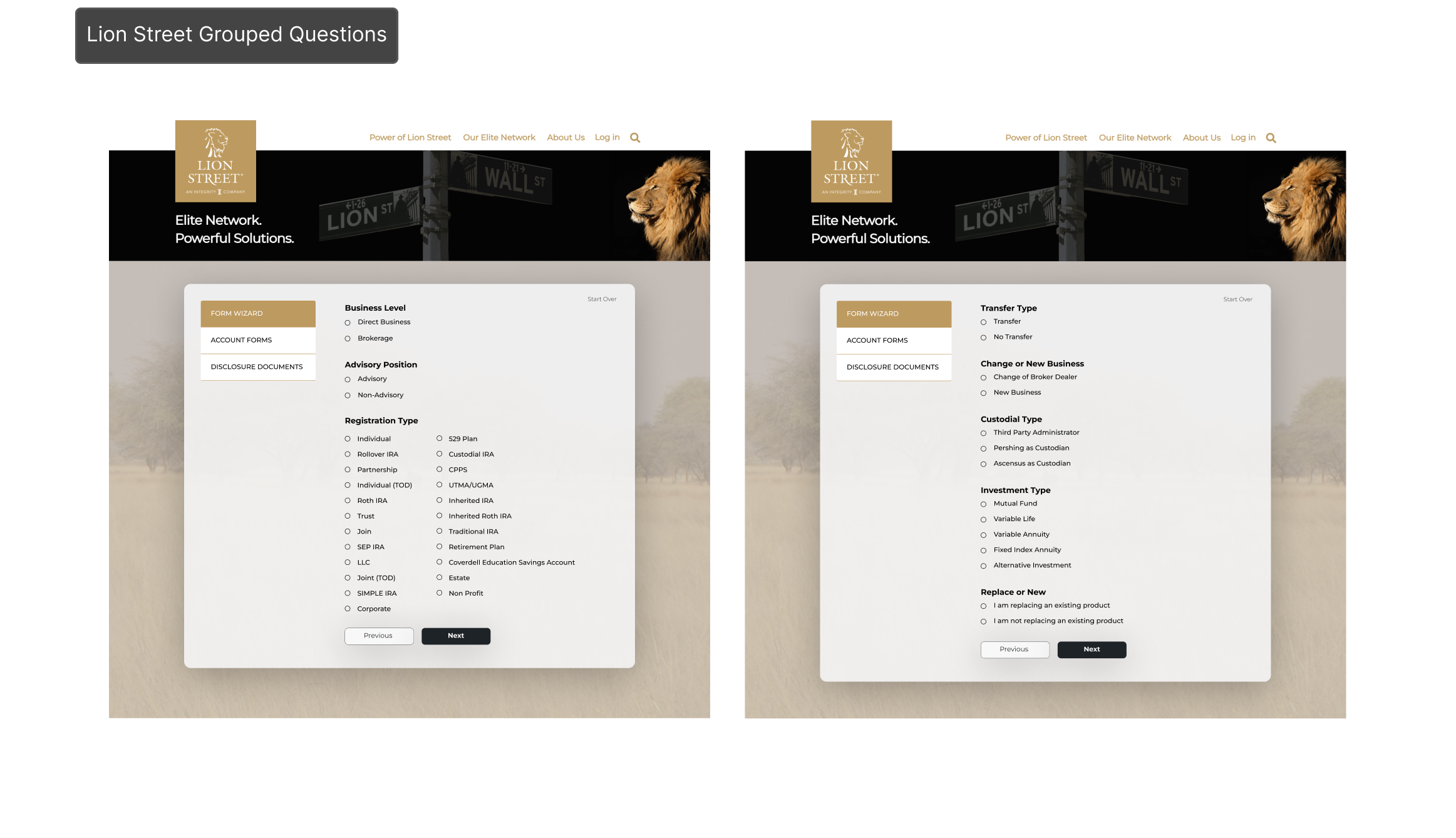
Streamline the form experience by minimizing unnecessary steps and organizing inputs into a clear, digestible flow, allowing agents to complete tasks faster with less friction.
Ensure Accuracy and Consistency
Standardize the process across all agents by generating reliable, consistent outputs, ensuring the correct documents are selected every time.
Improved navigation with clear progression (next, back, restart)
Conclusion
37.5%
Reduction in workflow steps
1,000+
Agents impacted
↓
Reduced errors and guesswork
Key Takeaways
This project highlighted how simplifying decision-making can dramatically improve efficiency, reduce errors, and create a more intuitive user experience.
The project resulted in a dramatically increased user experience and happy agents!
1. Reduce Decisions, Not Just Steps
Effective UX reduces unnecessary thinking, not just clicks.
2. Guide Users to the Right Outcome
Structured experiences help users complete tasks with greater confidence.
3. Conditional Logic is a Powerful UX Tool
Smart flows can dramatically reduce cognitive load and improve consistency.
4. Collaboration Drives Feasible Design
Close alignment with engineering ensured scalable and realistic solutions.
Want to connect?
If you like what you see and want to work together, get in touch!